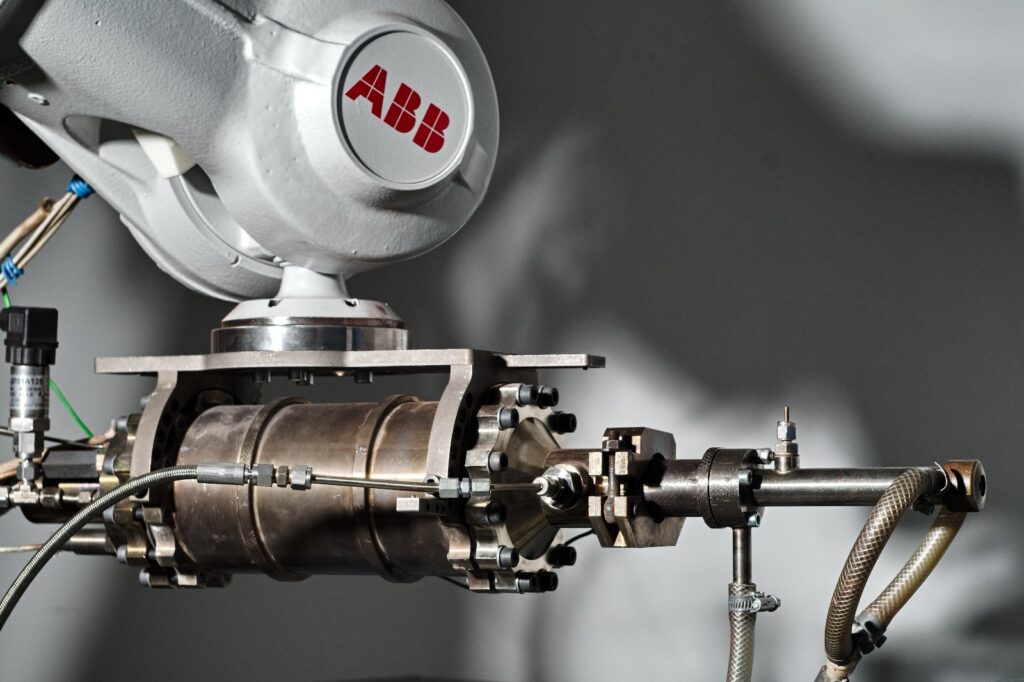
Cold spray technology is often ranked as one of the high-temperature thermal spray methods. However, as opposed to its generation-older counterparts, it does not use melting to process the materials. Instead, it works by propelling micron-sized metal particles to supersonic high speeds using compressed gases such as nitrogen or helium, delivered through a specially designed convergent-divergent nozzle.
Upon colliding with a component surface, the particles undergo intense plastic deformation at extreme strain rates, allowing them to bond tightly without melting. This solid-state bonding process results in dense, strong deposits, while effectively avoiding many detrimental phenomena encountered in the high-temperature thermal spray or laser-based additive manufacturing methods.
Because cold spray operates at relatively low temperatures compared to traditional thermal spray or welding techniques, it preserves the original microstructure and properties of both the particles and the base material. This makes the technology ideally suited for coating temperature-sensitive materials such as aluminum, copper, titanium, and even polymers, without causing thermal damage, oxidation, or distortion.
The resulting coatings offer excellent adhesion, low porosity, and high hardness, enhancing wear resistance, corrosion protection, and overall durability. Additionally, this process allows for precise control of coating thickness and material placement, enabling repairs of damaged parts as well as additive manufacturing of complex shapes with minimal machining. Its ability to deposit a wide range of metals and alloys with minimal environmental impact makes cold spray a versatile and sustainable solution in industries ranging from aerospace and automotive to electronics and medical implants.